
Published November 4, 2026
Your Dryer Is Telling You Something, Signs You Need Dryer Vent Cleaning in Bronxville NY
Most homeowners assume a dryer works until it stops working. The vent behind it rarely enters the picture until something goes wrong, and by then the problem is usually bigger than lint. Dryer vent cleaning in Bronxville NY is one of those services people put off for years, often because nothing looks broken. But the warning signs are there if you know what to look for, and some of them call for a professional before the next load of laundry.
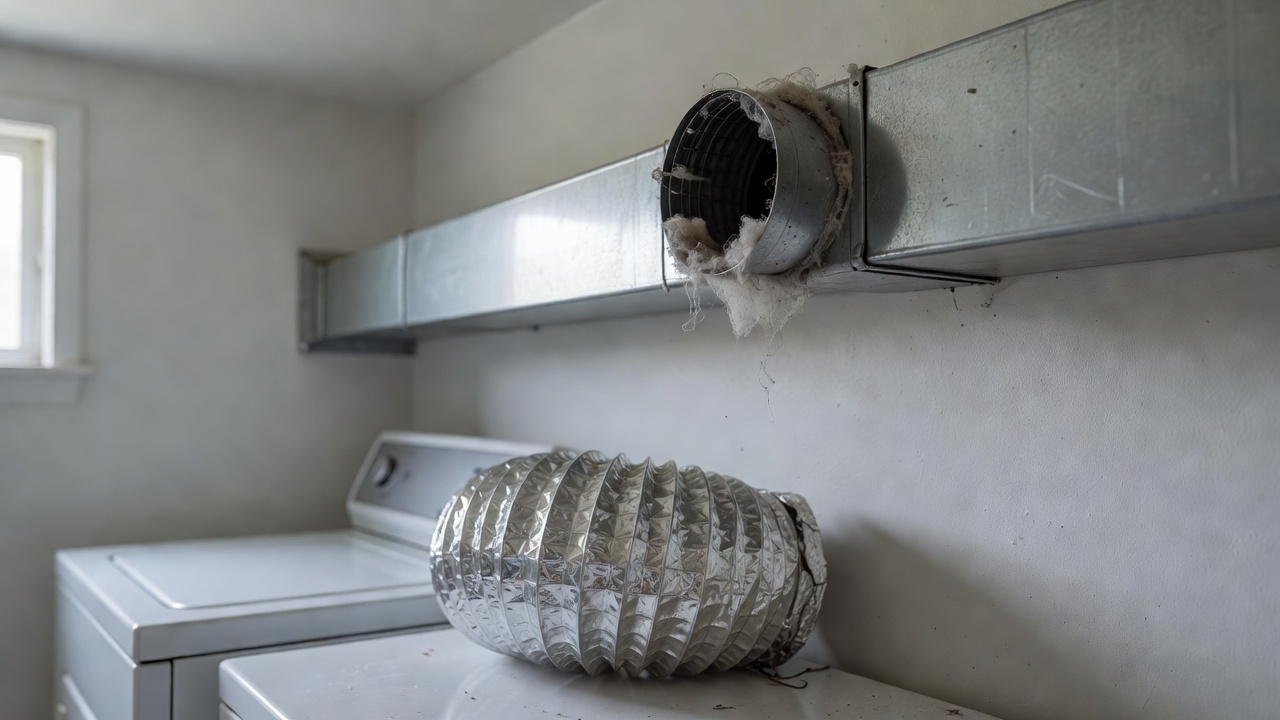
A homeowner in Crestwood called us in late winter after noticing her clothes took two full cycles to dry. She’d assumed it was an aging appliance. When our technicians pulled the vent line, they found a compacted lint blockage roughly eighteen inches deep, combined with a crushed flex section behind the dryer that had gone unnoticed for years. The dryer itself was fine. The vent had simply stopped doing its job.
That situation is more common than most people expect. Here’s what to watch for in your own home.
Warning Signs You Can See, Hear, or Smell
Clothes taking more than one cycle to dry
This is the most consistent early signal. If a normal load of towels or jeans consistently needs a second run, restricted airflow is the most likely cause. Heat is building up without anywhere to go, and the drum isn’t exhausting moisture the way it should. Keep an eye on it for one or two loads, then call a pro if it persists. This one doesn’t resolve on its own.
The dryer feels hot to the touch on the outside
Put your hand on the top or side of the cabinet mid-cycle. It should feel warm, not hot. If the outer surface is genuinely hot, heat is backing up inside the machine rather than venting out. That’s a fire risk and a signal to stop using the dryer until the vent is inspected and cleared.
A burning smell during or after a cycle
Lint is flammable. When it accumulates in the vent line and gets close enough to the heating element, it can scorch. A burning or musty smell coming from the dryer or the vent outlet is a call-a-pro-now situation. According to the U.S. Fire Administration, dryers cause approximately 2,900 home fires each year, and failure to clean the dryer vent is the leading contributing factor. Don’t run another load until someone has looked at the line.
The exterior vent flap barely moves during operation
Go outside while the dryer is running and find the exhaust cap, usually on an exterior wall or in a utility area. The flap or louver should be visibly moving and you should feel steady warm air coming through. If it barely twitches, or if airflow is weak, the vent has a restriction somewhere along the run. This is something you can observe yourself, but clearing a compacted vent line is not a DIY job.
Excessive lint on clothing or around the dryer door seal
Some lint on a lint screen is normal. Lint collecting on the fabric itself after a dry cycle, or accumulating around the door gasket and cabinet, means the system isn’t exhausting properly. The lint is going somewhere it shouldn’t. Worth a close look right away.
The laundry room feels humid or steamy during a cycle
Warm, moist air should be moving out of your home through the vent. If the room feels like a sauna while the dryer runs, moisture is backing up. Over time this contributes to mold growth in the wall cavity and around the vent termination. We’ve seen this in several older homes in Eastchester and Tuckahoe, where vent runs were long and the duct had partially disconnected inside the wall.
It’s been more than a year since the vent was last cleaned
This one requires no symptom. The CSIA recommends that dryer vents be inspected and cleaned at least once per year for average household use. If you have a large family, use the dryer heavily, or run pet bedding or heavy textiles regularly, twice a year is more appropriate. If you can’t remember the last cleaning, that’s the answer.
Visible lint or debris at the exterior vent cap
Lint that has worked its way past the vent line and is visible around the exterior cap is a sign the vent is saturated. It also attracts birds and small animals looking for nesting material, which creates a secondary blockage problem. We’ve cleared bird nests from vent caps on homes throughout Park Hill and Armour Villa, and in every case the homeowner hadn’t noticed the buildup until we pointed it out during a separate chimney visit.
What You Can Do Yourself and What You Shouldn’t
Pulling the lint screen before every load and cleaning it thoroughly is something every homeowner should do. Vacuuming behind the dryer and around the cabinet a few times a year is also reasonable maintenance. If your vent run is very short, a straight shot through an exterior wall, and you can see both ends clearly, a dryer vent brush kit from a hardware store can help for basic maintenance between professional cleanings.
What you shouldn’t attempt on your own: clearing a compacted blockage deep in the line, inspecting or reattaching a disconnected duct section inside a wall cavity, checking the vent termination cap on a roof or in a difficult-access location, or diagnosing a crushed flex duct. These situations require the right tools, a working knowledge of duct routing, and in some cases access to spaces that aren’t safe to reach without proper equipment.
NFPA 211, the standard that governs venting systems in residential construction, requires that venting components be installed and maintained so they don’t create a fire or carbon monoxide hazard. That standard applies to dryer vents as much as it does to chimney flues. The practical implication is that a blocked or damaged dryer vent isn’t just an inconvenience; it’s a code-relevant safety issue.
Why Bronxville Homes in Particular
A lot of the housing stock in Bronxville NY and the surrounding neighborhoods, Bronxville Heights, Cedar Knolls, Lawrence Park, dates from the mid-twentieth century or earlier. Dryer vent runs in these homes are frequently longer than current guidelines recommend, routed through finished walls or up through floors rather than directly to an exterior wall. Some were retrofitted when dryers became standard appliances and the original builder never anticipated the routing. That means more opportunity for blockage, more likelihood of a disconnected joint, and more reason to have a professional inspect the full run rather than just the accessible sections.
Get a Free Estimate
If any of the signs above match what you’re seeing, don’t wait for a repair bill or worse. Our team serves homeowners throughout Bronxville NY and the broader Westchester County area. Reach out through our website contact form for a free estimate and let us take a look at the full vent run before the next problem cycle.
Related services: chimney inspection service | chimney sweeping | chimney liner installation | masonry restoration
Frequently Asked Questions
How often should dryer vent cleaning be done in Bronxville NY?
For most households, once a year is the baseline. The CSIA recommends annual inspection and cleaning, with more frequent service if you run the dryer heavily or wash large items like pet blankets and comforters regularly. Homes in Bronxville with longer vent runs may need attention more often because lint accumulates faster in longer ducts.
How much does dryer vent cleaning cost in Westchester County?
Pricing varies depending on vent length, accessibility, and whether a blockage or repair is involved. Standard cleaning for a straightforward vent run typically falls in the range of $100 to $175. Longer runs, rooftop terminations, or situations requiring duct reconnection will cost more. We provide free estimates so there are no surprises before we start.
Can a clogged dryer vent actually cause a house fire?
Yes. The U.S. Fire Administration reports that clogged dryer vents are the leading cause of dryer fires, accounting for roughly 2,900 residential fires annually. Lint is highly combustible, and when it builds up close enough to the heating element or exhaust, it can ignite. This is not a theoretical risk.
Can I clean my dryer vent myself?
You can clean the lint screen and vacuum the area around the dryer cabinet. For short, straight vent runs, a consumer brush kit may help with surface lint. But a true blockage, a disconnected duct section, or a vent that terminates on a roof or in a difficult location needs professional equipment and assessment. Attempting to clear a compacted line without the right tools can push the blockage further in or damage the duct.
What’s the difference between cleaning the lint trap and cleaning the dryer vent?
The lint trap catches loose fiber from each load. The dryer vent is the duct that runs from the back of the machine through the wall to the outside. Cleaning the lint trap is daily maintenance. Cleaning the vent means clearing the entire duct run, which accumulates lint over time regardless of how well you maintain the trap. Both matter, but they’re separate tasks.
How long does dryer vent cleaning take?
For a standard residential vent run, our technicians typically complete the cleaning in 45 minutes to an hour. Longer runs, roof terminations, or situations where a repair is needed will take longer. We’ll give you a realistic time estimate when we assess the job.
Related from Bronxville Chimney: Chimney Sweep in Bronxville, NY · Chimney Inspection in Bronxville, NY · Chimney Inspection Bronxville NY